Andreessen Built the Browser. Now He's Funding the One for Agents.
Earlier this month we published the Three-Layer Citation Stack, mapping how AI engines actually cite brands across earned coverage, community signals, and your own website content formatted so AI engines can read it cleanly (e.g., FAQ pages, glossaries, comparison tables, pricing pages, etc.). That work is about where your company's name shows up when a buyer asks ChatGPT, Perplexity, Gemini, or Claude for a recommendation. Last week, something more fundamental shifted underneath all of that.
On May 20, Andreessen Horowitz led a $225M Series C in Exa, valuing the company at $2.2B. The same week, Will Bryk, Exa's CEO, said publicly that he believes agentic search will eventually be a larger business than Google's search ads. Worth noting, for anyone who needs the reminder: Marc Andreessen co-built Mosaic in 1993. That's the browser that made the consumer web usable for ordinary people. Thirty-three years later, his VC firm is leading the round on the new search engine being built to replace it.
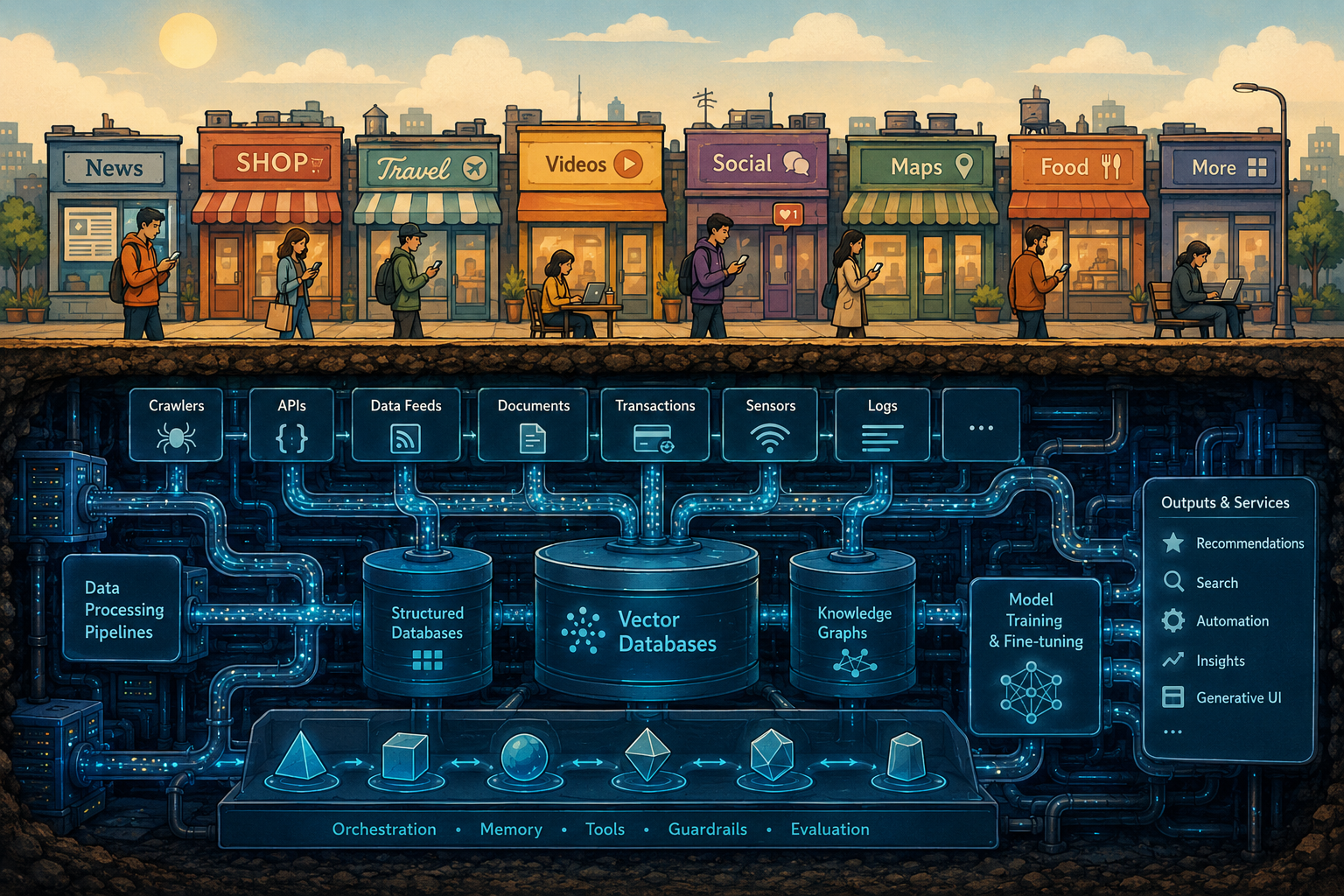
Exa is a search engine designed from the ground up to serve AI agents rather than human users. Hundreds of billions of URLs crawled, custom embedding models trained on a dedicated GPU cluster, vector databases built for agent throughput, latency under 200 milliseconds. Its current roster of customers includes Cursor, Cognition, HubSpot, and Monday.com that each query Exa to feed information to the AI products those companies are building. The end user of those products is increasingly an AI agent making decisions on behalf of a human buyer.
Exa isn't alone in this bet. Parallel.ai is making the same bet from a different angle, building a version of the web that's organized for AI agents instead of human eyes. Two companies in the same week with the same conviction.
On the same day Exa's funding hit, Jensen Huang declared a "brand new $200B TAM" (Total Addressable Market) for Nvidia's Vera CPU, which the company describes as the first CPU purpose-built for agentic AI. Nvidia has already sold $20B worth of Vera CPUs this year, before most enterprises have even mapped what their agent infrastructure will look like. Huang summed it up on the earnings call: "The world is rebuilding computing for agentic AI and robotic physical AI."
Three announcements happened on the same day. Two were from companies building the search engines and data systems that the agents query. The third was from the undisputed compute leader declaring an entirely new market for the chips those agents will run on. The pattern: the underlying plumbing of the web is being rebuilt for a primary user that isn't human.
For most brands, this is still invisible. The web you see, the websites you visit, the search results you scan, all still look the same as last month. But the infrastructure your buyer's agent is going to be querying within the next 18 months (or sooner) looks nothing like the one your brand currently optimizes for. The question worth pondering is whether the work you're doing today is even visible to the layer being built underneath the existing web.
Andreessen helped build the web for humans. Now his firm is funding the web for agents.
Get Found. Get Cited. Get Chosen.