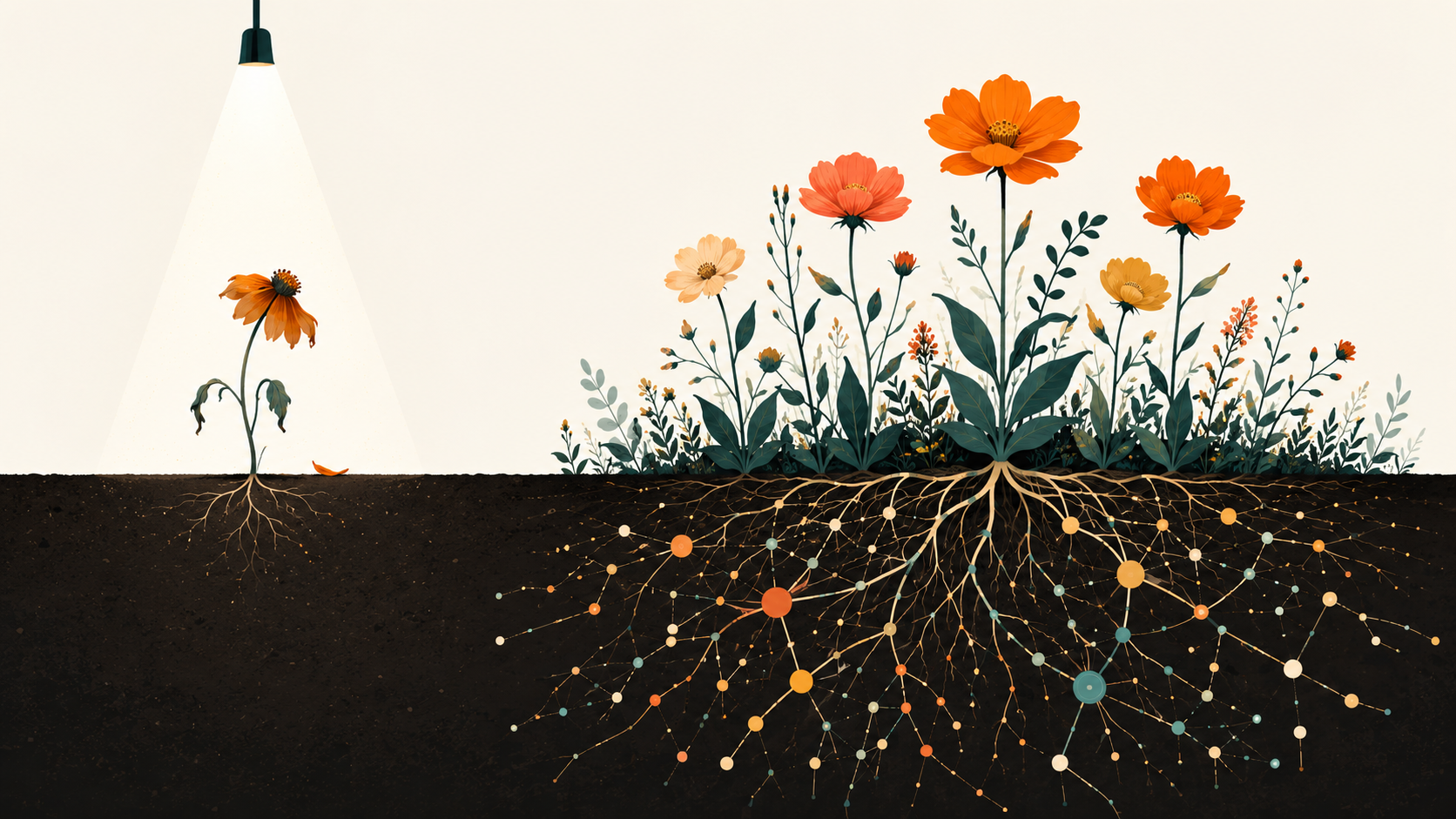
Showing up once isn't showing up.
A few weeks back, CITED covered the AI Citation Clock, which examined how quickly AI engines pick up and cite your content, with the median first citation arriving inside about one week. Getting cited, it turns out, happens faster than most people expect. Here's the part nobody warned us about: staying cited is a separate and much harder battle.
AirOps' "2026 State of AI Search" report provides new insights about the longevity of an AI citation. New data across more than a million answers shows how fleeting a single citation really is. Getting cited once doesn't stick. The same buyer question can include your brand in the AI answer one moment and drop it the next, because AI engines rebuild the answer fresh each time. So, a single citation is merely a snapshot, not a standing that's set in stone. The way you need to understand the citation is that while it's great to be cited at all, you can't treat one citation as "we're visible now."
AirOps' search report reveals that only about 30% of brands appearing in an AI answer are still there the next time the same question gets asked. Run the identical query five times and roughly 20% survive all five queries. AI engines rebuild the answer from scratch every time, so your brand is one of many it might reach for, or might skip.
That makes presence probabilistic. You raise your odds, but you don't lock a slot. Recall in traditional search you could win position #3 and hold that spot. In AI answers, there's no permanent spot to claim ownership. The most you can do is improve the probability the AI engines reach for your brand each time. Unlike traditional search, you can't secure a guaranteed place.
The goal moves from the one trophy citation to becoming the go-to brand the AI machines keep reaching for, answer after answer.
One signal moves those odds more than any other, and earned media was built for it: corroboration. Brands that show up with both a direct citation and independent mentions across the wider web are about 40% more likely to reappear across answers than brands leaning on a single source. When the same claim about you appears in three credible places, the machine returns it with confidence. When it lives in one place, its odds remain the flip of a coin.
Here's the trap, and I've watched it play out for 20 years. Founders believe one story in TechCrunch or The Wall Street Journal will "make them": the piece runs, the phones light up, sales go vertical. It almost never worked that way. Even a New York Times Business feature rarely did the heavy lifting on its own. The single hit was a moment, not a machine, and the companies that actually broke through were the ones whose story kept showing up everywhere. Think mindshare.
In addition to corroboration, specificity also compounds the effect. The AI citations that do survive say something concrete and liftable: a real number, a named comparison, a clear claim. AI engines will bury vagueness because there's nothing substantive or tangible to quote.
So the play for the second half of 2026 is straightforward. Build enough corroborated, specific presence across the web that the AI machines have no reason to leave you out of the entities cited. The Citation Clock told you how fast you can get in. This week is about whether you stay in once you are there.
Get Found. Get Cited. Get Chosen.