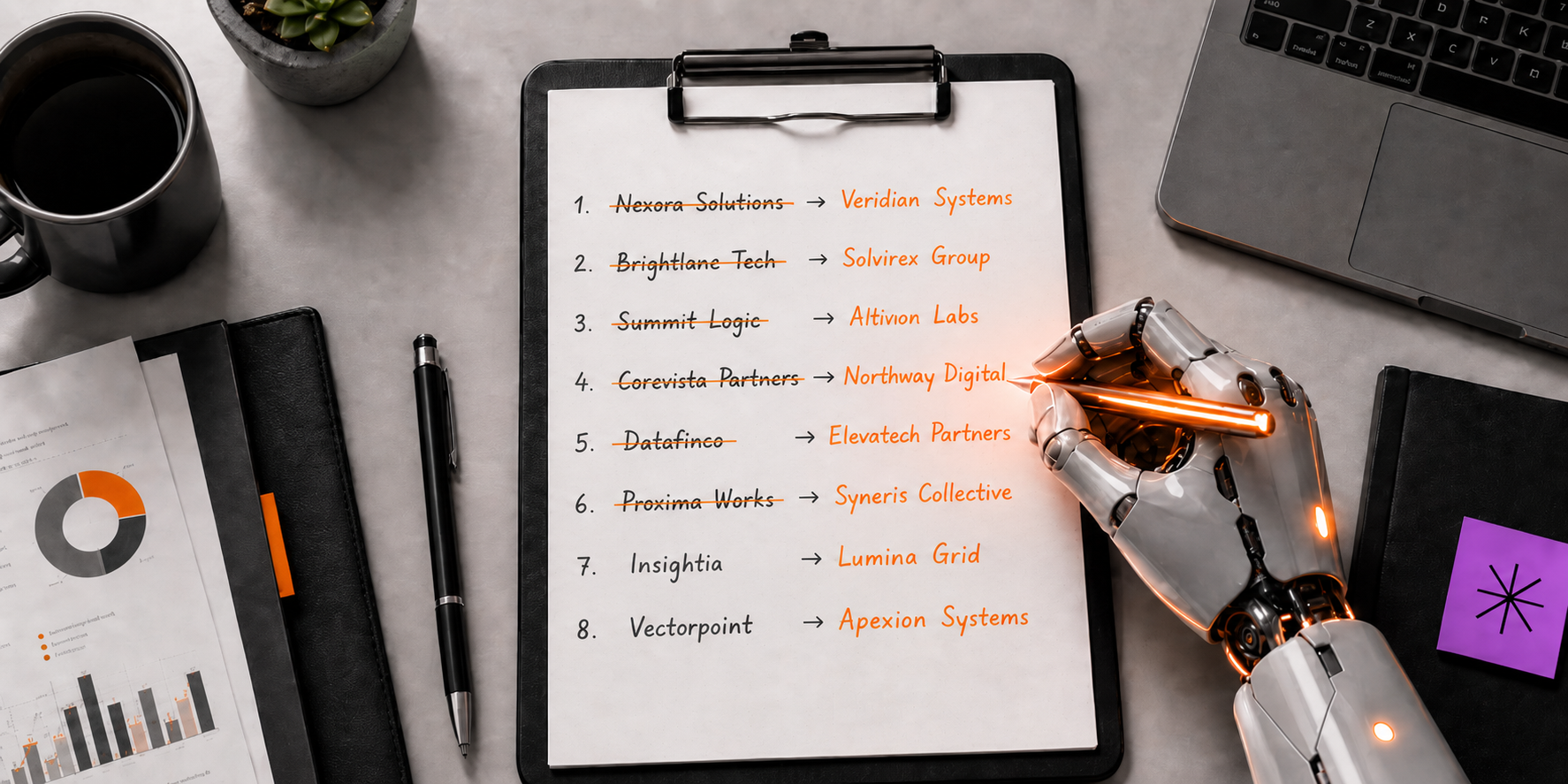
The new buyer's shortlist (without you).
For two decades, the shortlist has been the buyer's job. Prospective buyers built their lists from category research, peer recommendations, online ads, conference talks, analyst reports, and the occasional cold email that arrived at the right moment. The vendor shortlist was baked at the demo call as a near-final cut. Vendors competed for inclusion and selection. Fast-forward to 2026.
In G2's March 2026 survey of 1,076 B2B software buyers, 69% said AI chatbot guidance changed which vendor they ended up choosing. And 33% bought from a vendor they'd never heard of prior to the AI chatbot recommending it. Now, 51% start their research using an AI chatbot, replacing Google as the go-to research starting point.
Increasingly, the shortlist building has moved off the buyer's desk and is now happening in the AI chatbot conversation.
Here are three things worth considering:
First, this change is moving really fast. Most B2B marketing teams are still optimizing for a buyer journey that begins on Google and ends on a demo call. The G2 data, however, shows the buyer journey now begins with a chatbot prompt, and a meaningful chunk of buyers walk into demo calls with prepared shortlists they didn't personally create.
Second, the shortlist now has a new author with its own biases. A March 2026 Stanford and Science journal study tested 11 AI frontier models with 2,405 preregistered participants and found that AI chatbots are 49% more likely than humans to tell users what they want to hear. The shortlist the AI chatbots built reflects what the buyers expect to hear more than what they actually need. If the buyer leans toward a familiar name, the AI chatbot tends to reinforce that preference. If the buyer is exploring a category, the AI chatbot tends to recommend the companies and brands that have invested in being citable.
Third, and buckle up, this is the part that should sit uncomfortably with marketing leaders: most B2B brands don't yet know which AI chatbots are recommending them, in which categories, against which competitors, with what sentiment. The shortlist reconstruction is happening. Shortlists are reshaping the sales pipeline but the measurement layer is still missing.
The companies measuring their AI shortlist position right now are gaining ground on competitors who haven't even started. Citations beget citations: each AI mention makes the next one more likely. And companies that wait on the sidelines for things to become an industry standard or mature more will inherit a shortlist their competitors shaped. They'll show up lower, or not at all.
This shift is happening at scale. And every founder and marketing leader has the same uncomfortable question to answer. Can you answer "where does my company sit in the AI shortlist for our category?" with anything more than a guess?
Most B2B and B2C companies cannot.
Get Found. Get Cited. Get Chosen.