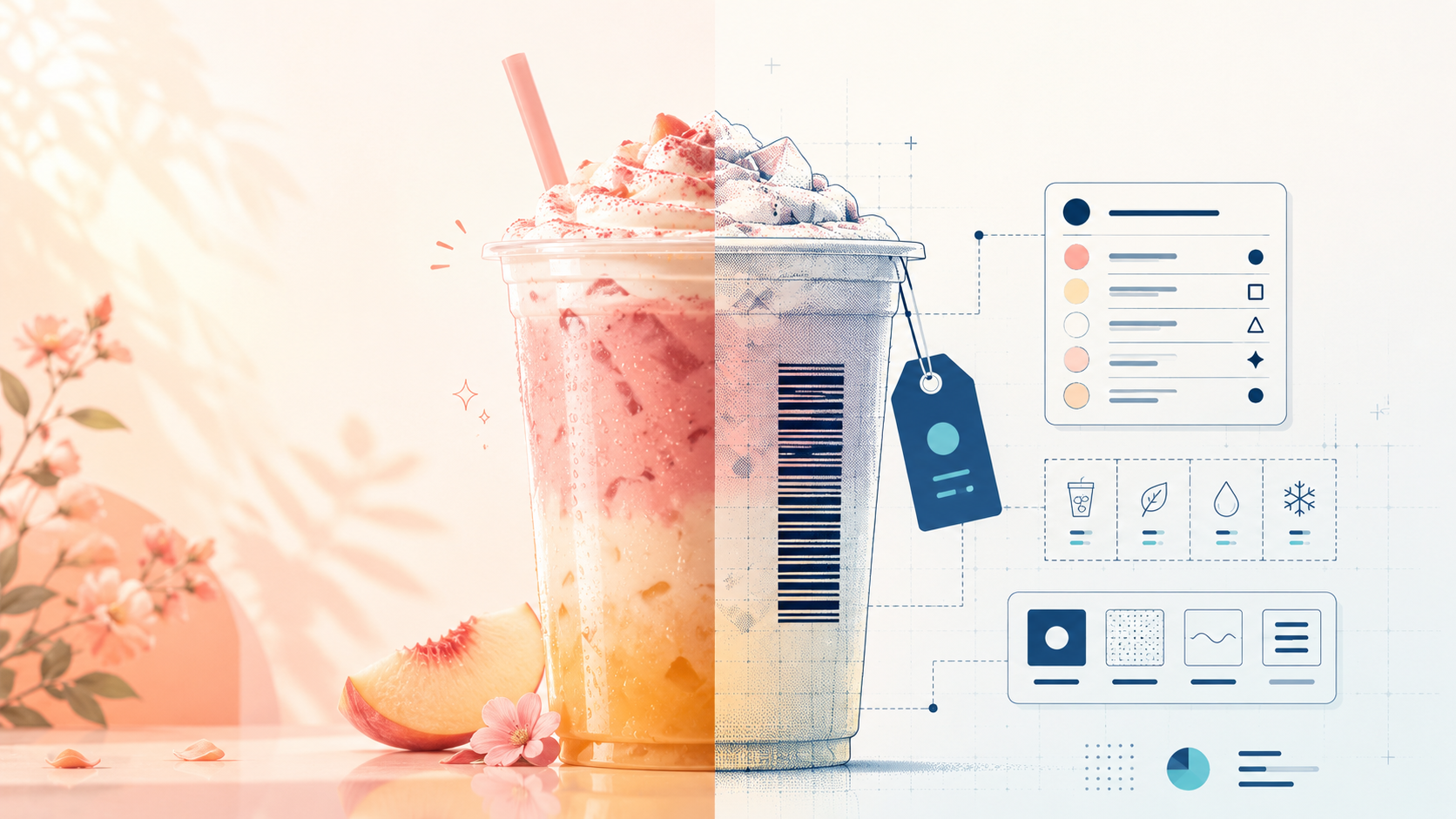
Human discovery is going visual and vibes-first. Machine discovery reads citations and structured facts. The same brand now has to win two opposite games at once.
"A G-Wagen is for a rich girl who does Pilates, and a vintage Defender is for a girl who has edge." That's a quote from Becca Elliott, a 29-year-old web designer, explaining to the Wall Street Journal her rationale for dropping $76,000 for a 1987 Land Rover Defender. And how's it drive? According to her, it "drives like a grizzly, old truck." She has since sunk another $31,000 into it, for a grand total of $107,000 for the 39-year-old relic.
Here's the deal: she's not an outlier. According to Hagerty, an insurer of classic cars, the number of women under 50 buying 1960s and '70s Broncos jumped 82% over the past three years. And restomod shops now sell custom builds for as much as $460,000. On Long Island, a vintage-car rental company reports that 80% of its bookings come from women reserving trucks for, you guessed it, photoshoots. Nobody rents a car for a photoshoot because of its towing capacity. The purchase is the post. Meaning the Instagram post.
Now hold that image next to a different one. When a shopper asks ChatGPT which restoration shop to trust or asks Perplexity where to get the best iced drink nearby, the AI engine can't see the deep-green paint or the pink cold foam. AI engines read text: citations, reviews, structured data, consistent facts. "Discovery" in 2026 has split into two opposite games, and most brands are playing only one of them.
The Funnel Assumed Every Surface Read the Same Signals. Now They Read Opposite Ones.
Marketers still talk about discovery as one funnel with one audience at the top. Build awareness, earn consideration, convert -- rinse and repeat. That model carried a hidden assumption: every discovery surface reads roughly the same signals, so one campaign could feed them all.
The two fastest-moving discovery channels just broke that assumption -- and in opposite directions. Human discovery keeps getting more visual, more sensory, more vibes-first. Machine discovery, the fastest-growing channel in the market, keeps getting more textual, more structured, and more evidentiary. The same brand, two gatekeepers, and two languages.
We call this split the Eye and the Parser. The eye buys the vibe. The parser buys the proof.
Two Machines, Opposite Tastes
Precision matters here, because the split is not humans versus machines. The feed is a machine too. Instagram and TikTok rank the vibe algorithmically before a human ever sees it. So the real picture is two machine gatekeepers with opposite tastes. The engagement machine optimizes for the eye: color, motion, emotion, and watch time. The answer machine optimizes for the citation: structure, consistency, and third-party evidence. One rewards what can barely be put into words. The other only trusts what has been written down.
The eye side is measurable now. In early July 2026, Starbucks told Yahoo Finance that more than 60% of its new beverages since 2024 feature a fruit flavor. Walk into any Starbucks and you'll see splashy posters for rainbow-colored summer concoctions. Cold foam, a topping whose main job is visual, appears in a third of all beverage add-ons at roughly $1.25 a pop. CEO Brian Niccol told investors cold foam sales grew 40% year over year last quarter, helping lift average ticket 3%. Restaurant tech firm Olo saw customers of its top ten beverage brands make about 60% more fruit-flavor modifications in May 2026 than one year earlier. McDonald's launched six new beverages, and half include "cold foam."
The parser side is just as measurable. One 2026 citation benchmark found brands are 6.5x more likely to earn AI citations through third-party sources than through their own domains. When ChatGPT began placing clickable brand links inside answers in May 2026, referral traffic jumped 157.7% in one week. McKinsey and Business of Fashion report 41% of consumers now trust generative AI search results more than traditional advertising. Semrush's 2026 AI Visibility Index found that on Gemini, the overlap between brands that get mentioned and domains that get cited can run as low as 30%. Being talked about and being trusted are now separate achievements.
Cold Foam Is a Vibe With a SKU
The most instructive case sits at the crossover point. Cold foam started as pure eye candy, a photogenic layer engineered for the camera. Starbucks then did something quietly brilliant: it gave the vibe a name, a price, and a line on the menu. Named, priced, and countable, the vibe became a fact. It now shows up in customization data, earnings calls, and news coverage, which means the parser can read it. A visual trend completed the full journey into citable text.
Glossier and Skims teach the same lesson from the brand side. Both were reportedly among the first brands surfaced in ChatGPT's shopping experience. The explanation industry observers give is disarmingly simple: each brand can be explained in one clean sentence, so the AI engine knows exactly who they are for and when to recommend them. The lesson isn't that vibe brands lose against machines. Incoherent brands lose.
Now onto the failure mode. Picture two restoration shops. Shop A posts stunning builds that light up the Instagram feed. Shop B has a modest social presence but deep reviews, structured pricing pages, press coverage, and active community threads. A shopper sees Shop A's truck on Instagram, falls in love, and asks an AI where to buy a restored Bronco at a fair price. The AI engine, however, recommends Shop B. Shop A created the demand, yet Shop B collected the money. We call this the vibe leak. Every brand investing in a feed (Instagram, TikTok, etc.) without a sound citation infrastructure is quietly running demand generation for a better-parsed competitor.
The Playbook: Win Both Games With One Motion
Here are a few ways to plug the vibe leak, so you're not paying to create demand that a competitor collects.
- Ship every campaign with a parser twin. For each photogenic launch, publish the machine-readable shadow: specs, pricing, availability, an FAQ, and a comparison table. The visual creates the question. The twin makes sure the AI engine answers it with your name.
- Give the vibe a proper noun. An unnamed aesthetic can trend, but it can't be cited. Cold foam travels through both tracks because it is a nameable unit with a price attached. Name the finish, the method, and the signature product. A vibe with a name becomes a fact. Think "memory foam" and thoughts of a soft pillow or mattress come to mind.
- Write your one-sentence answer before the machine writes it for you. AI engines recommend brands that they can explain. If your positioning needs a paragraph, the parser will compress you (and badly) or skip you altogether. Draft the sentence, then make every profile, page, and listing repeat it.
- Farm the middle layer. Since third-party sources carry 6.5x more citation weight than your own site, the job after a visual moment is conversion into written artifacts: reviews, press coverage, community threads, and expert roundups. Most teams celebrate the viral spike but let it evaporate. Instead, harvest it into citable text within one week. This is Machine Relations work, and it is where PR earns its budget in the AI era.
- Split the scoreboard, then measure the leak. Share of feed and share of answer are different metrics, usually sitting with separate teams that rarely compare notes. Track both. Then run the leak test: after every campaign, ask the major AI engines the buying question that your campaign should trigger. If the demand you created routes to someone else's name, you have found your most expensive marketing problem: a vibe leak.
The Endgame: The Eye Creates Demand. The Parser Routes It.
Neither game replaces the other. The feed will keep manufacturing desire, and the AI answer engines will keep deciding where that desire deserves to get routed. But the balance of power is settling in one place. As AI agents take over more of the buying journey, the citation layer becomes the tollbooth between wanting and purchasing. Whoever routes demand gets to tax it.
The winning brands will treat the two games as one motion: the eye gets you found, the parser gets you cited, and together they get you chosen.
Get Found. Get Cited. Get Chosen.
Sources: The Wall Street Journal, "The Expensive Accessory Every 'Hot Girl' Wants," Chavie Lieber, June 29, 2026. Yahoo Finance, Brooke DiPalma, July 2, 2026 (Starbucks figures company-reported). AirOps' Brand Discovery 2025 report. Similarweb analysis of ChatGPT brand links, May 2026. McKinsey x Business of Fashion, 2026. Semrush 2026 AI Visibility Index.